The ABCs of Success
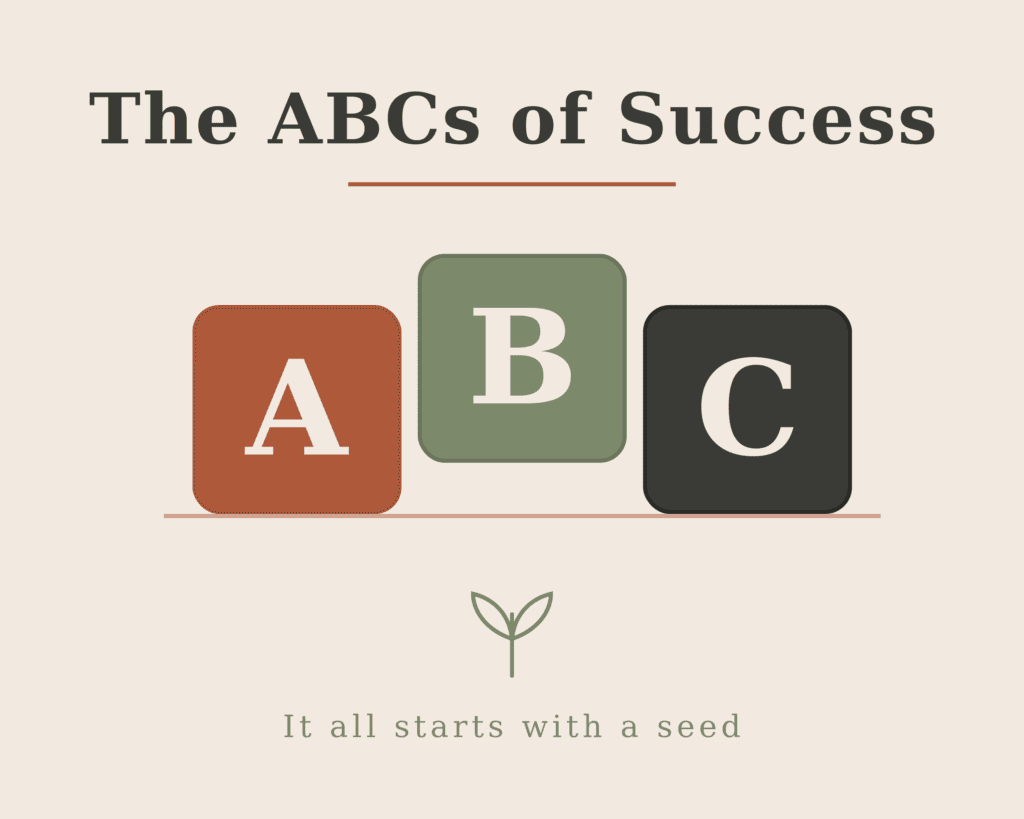
Every kind of success starts as a seed. Before the work, before the wins, there is a vision and an intention. That seed is where everything grows from, and learning to tend it is the whole practice.
The secret to success is no secret to those who have worked hard to achieve it. Unfortunately, many people give up before reaching their goals because they are not prepared for the bumpy ride to the top. Those who succeed understand the process.
The first step toward success is having a strong idea. Anyone can have one, but very few people act on it. The reasons vary: lack of confidence, poor timing, or a lack of support, to name a few. At the beginning of the success process, it is essential to have a vision and an intention. I call this the seed of success. Once you have the seed, you can begin the process with the ABCs of success.
The A of Success is the Action Plan. An action plan is a plan for achieving success. You create your action plan by visualizing the desired outcome (outcome visualization) and then working your way back to the steps that get you there (process visualization). Think of a coach of a sports team. The coach uses both with the players, focusing on winning the game (outcome visualization) and then preparing the team with practice schedules, game film, and steady motivation (process visualization).
A great way to visualize success is to create a drawing or a model of the outcome you want with as many details as possible. If you are striving for personal or business success, draw a picture of each step needed to achieve your result. Focus on how you will feel once you have achieved success, and revisit that feeling when you are dealing with difficulty or the unexpected.
Once your vision is created, you will need to create a plan. It is critical to consider the pros and cons of your plan and prepare with pitfall planning. Pitfall planning covers the obstacles that may interfere with your success. Many people fall short because they have not considered all aspects of their plan. Be sure to write down each step in detail and set small, smart goals with pitfall plans. This is the map for the Action Plan on the road to success.
The goal setting and achieving process will help motivate you. When you have achieved a goal, be sure to celebrate the win. Focusing on small positive achievements fills your brain with dopamine (the feel-good hormone released when you achieve something), which makes you want to achieve more. Keep your goals small, because goals that are too hard to carry out will confuse your brain and work against you on your quest for success.
The B of Success is Belief. You must believe that you can achieve success and believe in your reason for wanting it. Confidence that you can succeed, paired with belief in its value, is the key to keeping you on the road. A daily visualization meditation, covering both process and outcome, can help keep your success vision alive. Keeping track of your progress can strengthen your confidence and give you a sense of achievement. Reminding yourself of why you want success will help keep you motivated.
The C of Success is Commitment. Setting an intention and committing to success will help you stay focused until you reach your desired outcome. The commitment mindset is the belief that there is no choice but to succeed at whatever you are pursuing. The most powerful way to confirm your commitment is to create a commitment form and sign it, since the written word carries more weight than simply saying you will commit. This way, you will feel more obligated to continue when you run into obstacles. The intention is the will behind the commitment. When you set an intention, you focus only on success, and although you know there will be obstacles, you will succeed.
Successful people know that challenging work, dedication, and consistency are essential to achieving success, but believing it is possible is what makes it happen. Those who reach their goals keep going when times get tough. They continue when difficulty hits because they have prepared with pitfall planning. And once they succeed, they stay diligent and work through the rough patches, because they built the tools to do so along the way.
The bottom line is that becoming successful can be as easy as ABC if you have a success plan, keep your eye on the goal when adversity strikes, and believe that you can make it happen.
If you are ready to plant your own seed of success, I would love to help you tend it. Book a discovery session with me and we will map out your ABCs together.
Gemma Nastasi PCC, NBCHWC, CAPP, CHNC

Take a Savoring Break to Become Happier
Savoring the Good: A Simple Exercise to Boost Happiness
Savoring life’s joyful moments is a powerful way to increase happiness. Sometimes we move so quickly through life that we forget to pause and truly enjoy the good moments when they happen.
Savoring is the practice of noticing, appreciating, and extending positive experiences. It can be as simple as remembering a happy moment, looking at a favorite photo, enjoying a peaceful walk, or reflecting on something good that happened during your day.
Research in positive psychology supports savoring and gratitude practices as tools that can help increase positive emotions and well-being. Savoring helps us pay attention to what is good, instead of allowing our minds to focus only on what is stressful or negative.
A Simple Savoring Exercise
The next time you take a break, try this simple exercise:
Think about one positive moment from your day.
Close your eyes and remember the details.
What did you see?
What did you hear?
How did you feel?
Why did that moment matter to you?
Allow yourself to stay with that positive feeling for a few minutes.
You can also write down three good things that happened and why they happened. This “Three Good Things” practice has been studied in positive psychology and has been shown to increase happiness and decrease depressive symptoms over time.
The Happiness Reward
Savoring does not have to take a lot of time. It simply asks you to slow down and notice what is already good in your life.
The next time you experience a joyful moment, pause. Take it in. Let yourself enjoy it.
That small moment of awareness may become a happiness reward.
Gemma Nastasi, PCC, NBHWC, CAPP, CHNC

Capitalize on Adversity
When adversity strikes, it can have debilitating effects on a person’s life. It is a force to be reckoned with. It can bring negative change that feels completely out of our control.
What many people do not realize is that while we cannot always control adversity, we can control how we respond to it.
Adversity can either keep us stuck in bitterness, sadness, and rumination, or it can become a place where positive growth and strength begin to form. That does not mean adversity is easy. It means we have a choice in how we move through it.
A few years ago, I met a woman in the locker room at my exercise club. She was striking in her presence and beauty, and I was immediately drawn to her positive energy.
After talking with her for a while, I learned that she had been struggling with cancer for many years and was preparing for another surgery in a few weeks. She told me that doctors had given her only months to live a few years earlier, and she felt blessed to still have the gift of life.
Although she was initially devastated by her prognosis, she moved forward and began helping other women who were also fighting for their lives. She traveled all over the country as a motivational speaker, sharing how to live with cancer.
I never saw her again, but I never forgot her.
She is a classic example of someone who capitalized on adversity.
Lessons From Adversity
Over the years, I have learned valuable tools from people who have faced difficult times.
One man told me that adversity is like going to battle. He said that while he is in it, he carries inspirational quotes in his pocket to remind him that others have fought and won.
I learned how red lipstick helped one woman portray positivity during her darkest moments.
Many people have told me that prayer gave them the strength to overcome.
What I have learned is that people who rise through adversity usually find something to hold onto. It may be faith, purpose, gratitude, service, courage, or hope. Sometimes it is one small habit that helps them get through the day.
Strategies to Help You Move Through Adversity
If you are struggling with adversity, try incorporating some of these strategies:
- Take a step back and ask yourself what positivity you can cultivate.
- Pray or meditate.
- Practice mindfulness.
- Journal your thoughts and feelings.
- Use outcome and process visualization.
- Help others.
- Dress in a way that helps you feel stronger.
- Add positive activities into your life.
- Connect with positive people.
- Write gratitude lists.
Adversity can feel overwhelming, but small steps can help you regain a sense of control. You may not be able to change what happened, but you can choose one positive action, one helpful thought, or one supportive person to reach for.
Lastly, some of the luckiest people in the world say they found the silver lining in unfortunate events. Perhaps we all have some luck if we know how to use it.
Gemma Nastasi, PCC, NBHWC, CAPP, CHNC
Make This Your Best Year Yet
Every year brings new possibilities. Even when life has been difficult, stressful, or filled with adversity, we still have the power to choose where we place our attention and how we move forward.
Negativity can feel heavy, especially when life does not go according to plan. But even during challenging times, we can begin to focus on the positive changes we want to create in our lives.
One of the most powerful lessons from positive psychology is that happiness is not only something we feel. It is also something we can practice.
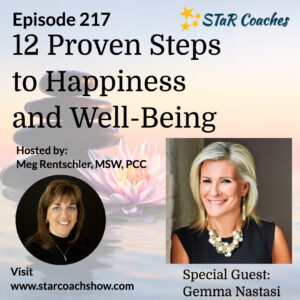
In my interview with Meg Rentschler on The Star Coach Show, I discussed the 12 intentional activities that can help increase happiness and well-being. These activities are part of what I call the Happiness Wheel, and they are simple tools we can use to support a happier and healthier life.
These 12 intentional activities include:
Gratitude
Kindness
Relationships
Goals
Spirituality
Optimism
Flow
Mind/body connection
Avoiding comparison
Savoring
Forgiveness
Coping
Each one gives us a way to shift our focus, strengthen our mindset, and become more intentional about how we live.
You do not have to change everything at once. Start with one small activity. Write down three things you are grateful for. Reach out to someone you care about. Set one meaningful goal. Practice forgiveness. Take a walk. Pause and savor a positive moment.
Small choices can create powerful change over time.
This year, I encourage you to focus on the positive changes you want to make. Choose one area of your life where you want to feel happier, healthier, stronger, or more at peace.
Then begin there.
You have more power than you may realize to create a life filled with meaning, purpose, happiness, and well-being.
To listen to my interview with Meg Rentschler on The Star Coach Show, visit:
https://starcoachshow.com/217-12-proven-steps-to-happiness-and-well-being-gemma-nastasi/Gemma Nastasi, PCC, NBHWC, CAPP, CHNC

Creating a Positive Life After a Negative Event
Copyright © 2026 Gemma Health Coach - All Rights Reserved.
